Client
Sector
BONNER Provided

The Challenge
A manufacturer approached BONNER for support with a weighing challenge on a new automated bag-filling machine. The machine dispensed a viscous material, but the output was not consistent enough to reliably determine the final weight of each bag.
Manual weighing was also awkward and difficult to carry out cleanly within the production process. The manufacturer needed a solution that could measure the actual weight of the bag during filling and use that measurement to trigger the machine to stop once the required target weight had been reached.The application needed to accommodate product weights ranging from approximately 0.6 kg to 4.5 kg gross, with potential future requirements of up to 6–7 kg. It also had to integrate with the existing machine controls, including a 24 V signal requirement.
BONNER worked closely with the client’s engineering and maintenance teams to assess the application and identify a suitable weighing arrangement.
Operational Impact
Following an initial remote assessment, BONNER arranged a site visit to inspect the machine, take measurements and evaluate the available mounting options.
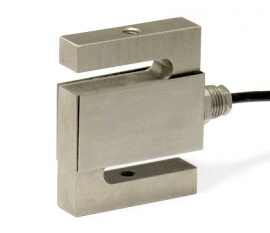
This assessment identified a critical consideration: the dispensing pipe could make contact with the weighing arrangement, introducing additional forces that could affect measurement accuracy. An initial concept explored using two S-beam load cells to accommodate the physical arrangement. Following modifications to the dispensing nozzle, the team refined the design towards a single calibrated S-beam load cell, simplifying the weighing system and avoiding the need to synchronise two sensors.
The recommended solution incorporated:
- S-beam load cell to measure the bag’s weight during filling.
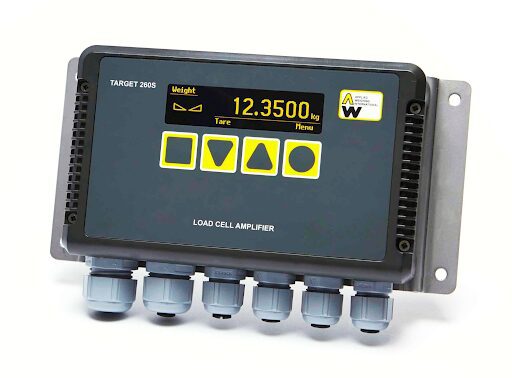
- Applied Weighing Target 260S load cell amplifier to process the load-cell signal.
- Calibration and configuration to prepare the weighing equipment for the application.
- Control-system integration to allow the measured weight to be used as the trigger for stopping the filling machine.
BONNER also advised on the mechanical mounting arrangement, highlighting the importance of applying the load vertically to help maintain measurement accuracy. The amplifier could be configured and calibrated before shipment, with provision for a zero adjustment after installation.
Selecting a suitable load cell was only one part of the challenge. The physical arrangement of the dispensing nozzle, bag support and weighing equipment had to be considered alongside the electrical and control requirements. By assessing the machine in its actual operating environment, BONNER helped identify potential sources of measurement error before finalising the recommended arrangement. The revised approach was developed around the client’s equipment and requirements, rather than relying on a standard component selection alone. This application-led process brought together weighing technology, calibration, mechanical considerations and control-system integration to support a practical solution for automated filling.
Result
Key expected benefits include:
- Improved fill-weight control
Measuring the bag directly allows the machine to use actual measured weight as the stopping point, rather than relying solely on the dispensing system’s existing counter.
- A more practical weighing process
Integrating weighing into the machine can reduce reliance on separate manual weighing and help streamline the filling operation.
- Flexibility for different product weights
The selected arrangement considered current product weights and potential future requirements, providing flexibility as the application develops.
- Simplified system design
Moving to a single calibrated S-beam load cell reduced the complexity of the proposed arrangement and avoided concerns about synchronising multiple sensors.
- Support for material efficiency
More controlled filling has the potential to reduce overfilling and unnecessary product giveaway, helping minimise material waste.
- Technical support beyond product supply
BONNER’s involvement included application assessment, product selection, calibration planning and consideration of the interface with the existing machine controls.
This project demonstrates why successful industrial weighing applications require more than selecting a load cell with the appropriate capacity.Mechanical forces, mounting arrangements, calibration and control-system requirements can all influence how reliably a weighing system performs.By working closely with the manufacturer, BONNER helped develop a solution tailored to the machine and its operating requirements, combining an S-beam load cell with an Applied Weighing Target 260S amplifier.
For manufacturers looking to improve automated weighing, filling accuracy or the integration of weighing equipment into production machinery, BONNER provides technical support spanning load-cell selection, application assessment, calibration and control-system integration.
Need support with an industrial weighing application?
Contact BONNER to discuss your requirements and find a suitable weighing solution for your process.