Client
Sector
BONNER Provided

Ensuring Accurate Temperature Measurement at Pilgrims, Carrickmacross
For Pilgrims, these temperature measurements need to be accurate and traceable, while also meeting specific regulatory requirements for calibration tolerances. BONNER has supported Pilgrims with site calibration since 2017. In 2019, Pilgrims approached BONNER with a new requirement for the calibration of the temperature probes used on its cooker and cooler vessels.
The challenge was to develop a calibration method that could meet the required tolerance while also testing the complete measurement loop. Previously, the temperature probes were calibrated using a signal simulation alongside a single-point temperature check. Pilgrims’ requirements changed, with calibrations now required at three temperature test points per probe and a calibration tolerance of ±0.5°C.
There was also a requirement for any probe found to be operating at more than 80% of the permitted tolerance to be adjusted to improve its performance. This meant BONNER needed to develop a calibration method that could accurately test the probes across multiple temperature points while providing the level of detail required by Pilgrims’ regulatory and client requirements.
Developing a Practical Calibration Solution
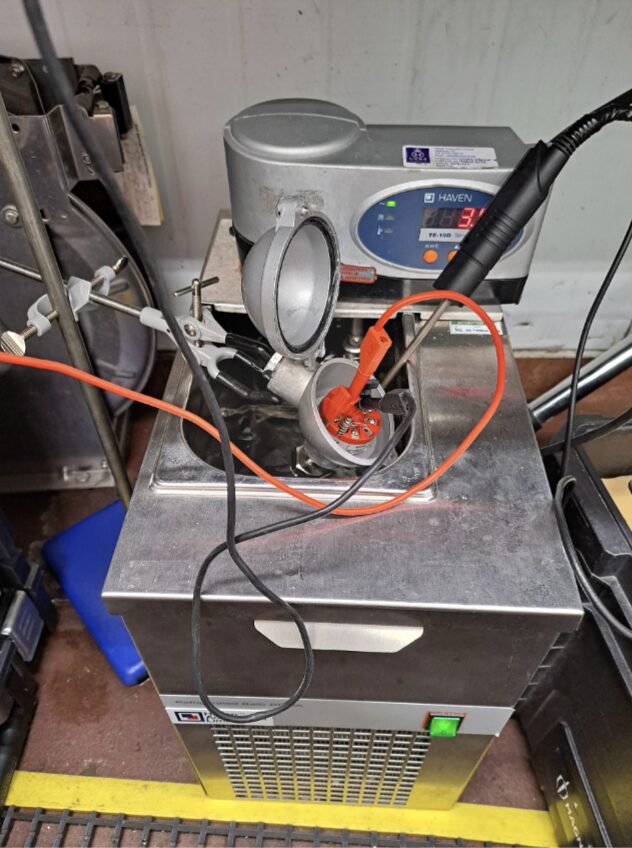
In 2019, BONNER proposed a different approach. Rather than calibrating the probes while installed on the cooker and cooler vessels, the temperature probes would be removed and calibrated using a controlled benchtop setup.
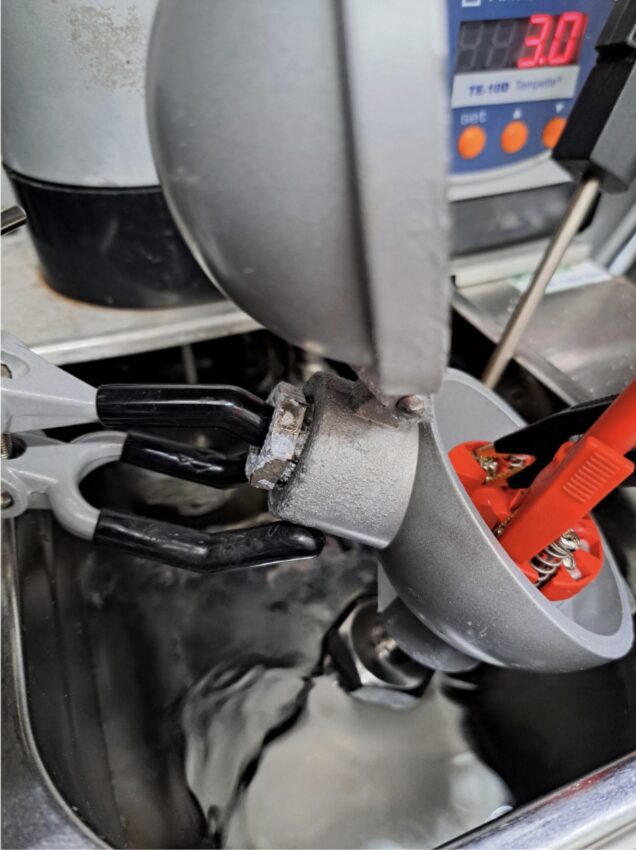
The solution involved using a large stirred liquid temperature bath into which the probes could be fully immersed. This was important because of the physical design of the probes. Their short stem and large screw thread meant they could not be inserted deeply enough into BONNER’s standard dry block temperature calibrators. Fully immersing the probe and screw thread also helped prevent ambient air temperature from influencing the calibration.
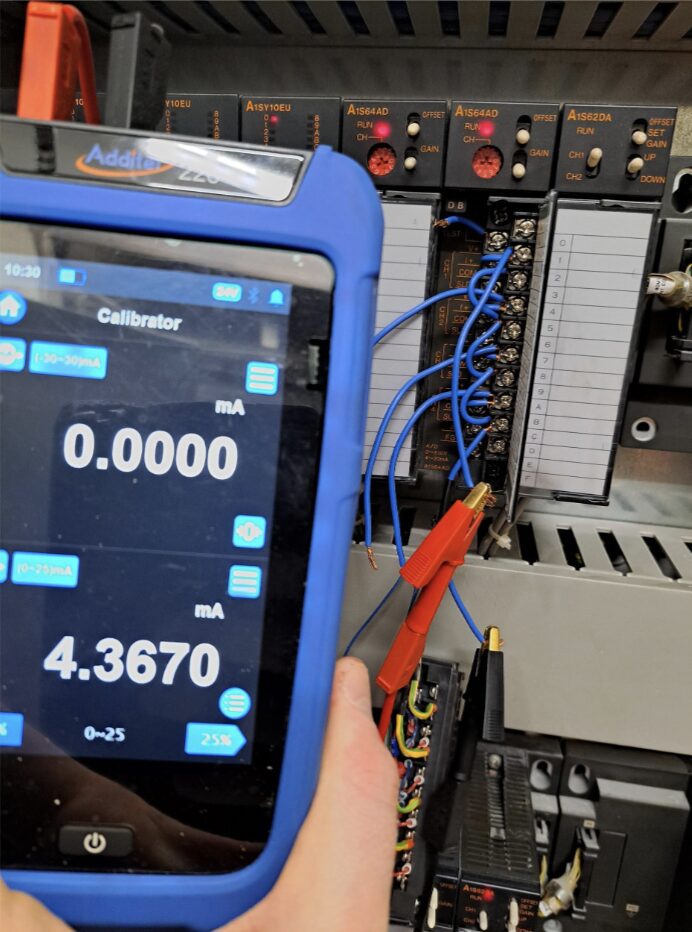
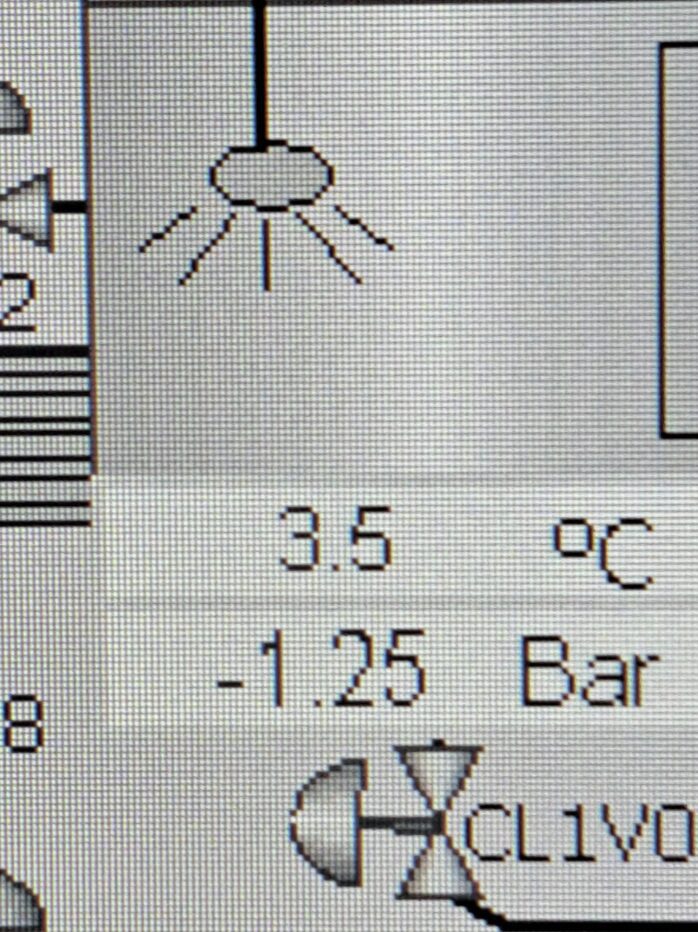
The probes were disconnected from the vessels and transferred to a safe work area where they could be connected to a power supply. BONNER’s technicians could then measure the current output from each temperature transmitter at the required temperature setpoints. These measured signals were subsequently simulated into the PLC system, allowing the reading displayed on the HMI to be compared against the temperature measured during the calibration.
This provided a way to test not only the temperature probe itself, but the complete signal loop from the transmitter through to the PLC and HMI.
Working Around the Equipment Design
The physical design and installation location of the probes presented one of the main challenges.The probes are relatively short and have a large threaded section before the transmitter housing. Some are also installed in difficult-to-access locations on the vessels. Their short length is necessary because the vessels contain internal agitators, which restrict the available space for the probes.
The probe design meant that a conventional dry block calibrator could not provide sufficient immersion depth. BONNER therefore sourced a large-volume stirred liquid temperature bath capable of accommodating the probes correctly. The approach also avoided the need to move a vessel containing hot liquid. Instead, the probes were disconnected and calibrated safely in a controlled work area.
Managing a Detailed Calibration Process
The calibration method is more involved than a conventional single-point calibration, with each probe requiring testing at three temperature points and the complete signal loop checked. To manage the volume of results, BONNER developed a detailed spreadsheet to record the raw calibration data, including the transmitter signal outputs and simulated PLC readings.
The spreadsheet also provided colour-coded notifications for instruments operating outside 80% of the permitted calibration tolerance. This allowed the team to quickly identify probes requiring adjustment or further attention. Because of the time required to disconnect, calibrate and reconnect the probes, the work was divided into low-temperature and high-temperature calibration groups, with each group taking approximately two days to complete.
Minimising Disruption to Production
The calibrations were initially carried out during Pilgrims’ factory shutdown period. In 2024, Pilgrims did not have its usual factory shutdown, so BONNER worked with the site team to reschedule the calibration work over the May and June bank holiday weekends. This allowed the required work to be completed while minimising the impact on production. Planning the work around the operation was particularly important given the number of instruments involved and the time required for the benchtop calibration process.
The Result
The calibration method developed by BONNER allowed Pilgrims to test the temperature measurement system at all three required temperature points and verify the complete signal loop. The probes could be assessed against the required ±0.5°C tolerance, while the additional 80% tolerance threshold provided a clear mechanism for identifying instruments that required adjustment.
This gave Pilgrims greater confidence that the temperature measurements used at critical cooking and cooling stages were performing within the required parameters and supported the site’s regulatory requirements.
The success of the approach also meant it could be applied to other large temperature and conductivity transmitters at the Pilgrims CIP Kitchen, where the equipment similarly could not be accommodated within standard dry block temperature calibrators.
The project demonstrates that effective calibration isn’t always about applying a standard procedure to an instrument. The physical design of the equipment, how it is installed, the production environment and the measurement requirements all need to be considered.
By understanding Pilgrims’ process and regulatory requirements, BONNER developed a calibration method around the actual equipment and operating environment while providing the detailed measurement data needed to verify performance.
The result was a practical calibration solution that gave Pilgrims confidence in the temperature measurements behind a critical part of its production process.