

On-site calibration of temperature sensors changes the game by bringing traceable standards directly to the field, allowing BONNER technicians to verify accuracy within the sensor’s actual operating environment. This approach ensures that your measurement loop, from the sensor to the transmitter and PLC, is functioning perfectly as a complete system.
Why Field Calibration is the Smarter Move:
- Minimised Downtime: Instruments remain in place, reducing out-of-service time from days to mere minutes or hours.
- Environment: Testing in the actual operating environment accounts for site-specific factors like vibration, electrical noise, and installation stresses that a lab cannot replicate.
- Total Loop Verification: Technicians can calibrate the entire measurement loop simultaneously, ensuring that the sensor, wiring, and controller all communicate accurately.
- Results & Documentation: Calibration certificates can often be issued on-the-spot using portable reference calibrators and laptops, keeping your compliance records up to date.
- Operational Continuity: Ideal for large or fixed systems where removal is impractical, such as those found in food and beverage process lines.
On-Site Pt100 Calibration: Standard Operating Procedure (SOP)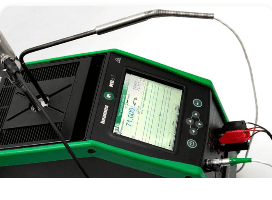
This SOP details how BONNER can verify and calibrate a Pt100 RTD sensor using a portable dry-block calibrator. This method ensures that the sensor is accurate within its specific industrial environment.
Preparation and Safety
- Isolate the Sensor: Ensure the sensor is safely removed from the process. If it’s in a thermowell, you can often remove the probe without depressurising the line.
- Visual Inspection: Check for mechanical damage, corrosion, or moisture in the terminal head.
- Set Up Calibrator: Place the dry-block on a level surface away from strong drafts. Connect it to a power source and power it on.
Sensor Setup
- Select Correct Insert: Use an insert with a hole that provides a snug fit (typically 0.5 mm clearance) to ensure optimal thermal transfer.
- Immersion Depth: Insert the Pt100 (Unit Under Test – UUT) and the reference probe (if using one) into the block wells. For the best accuracy, ensure they are fully immersed to the bottom of the block to reduce stem conduction errors.
- Monitor resistance with a traceable meter or temperature readings on local Hmi.
Calibration Procedure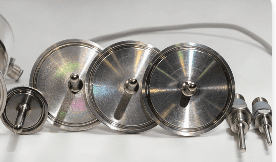
- Define Test Points: Select at least three points across the operating range (e.g., 0%, 50%, and 100% of the process scale).
- Ramp and Stabilise: Set the dry-block to the first temperature point. Wait for the system to reach thermal equilibrium—this typically takes 10 to 30 minutes depending on the temperature jump.
- Record Readings: Once stabilised, record the actual temperature from the dry-block (or external reference) and the reading from the Pt100.
- Repeat: Follow the same process for the remaining test points.
Documentation
- Completion of report and certification
- Getting client access to the cloud for access to all available calibration certificates
Why choose BONNER?
Beyond calibration, field technicians and engineers bring hands-on expertise to identify and fix complex automation issues like signal noise or grounding loops that a remote lab could never detect.
Book Your Temperature Sensor Calibration:
Ensure your thermal processes remain accurate, efficient, and compliant with professional calibration services from BONNER.
Contact our team today to schedule your calibration or learn more about our full range of temperature calibration solutions.