

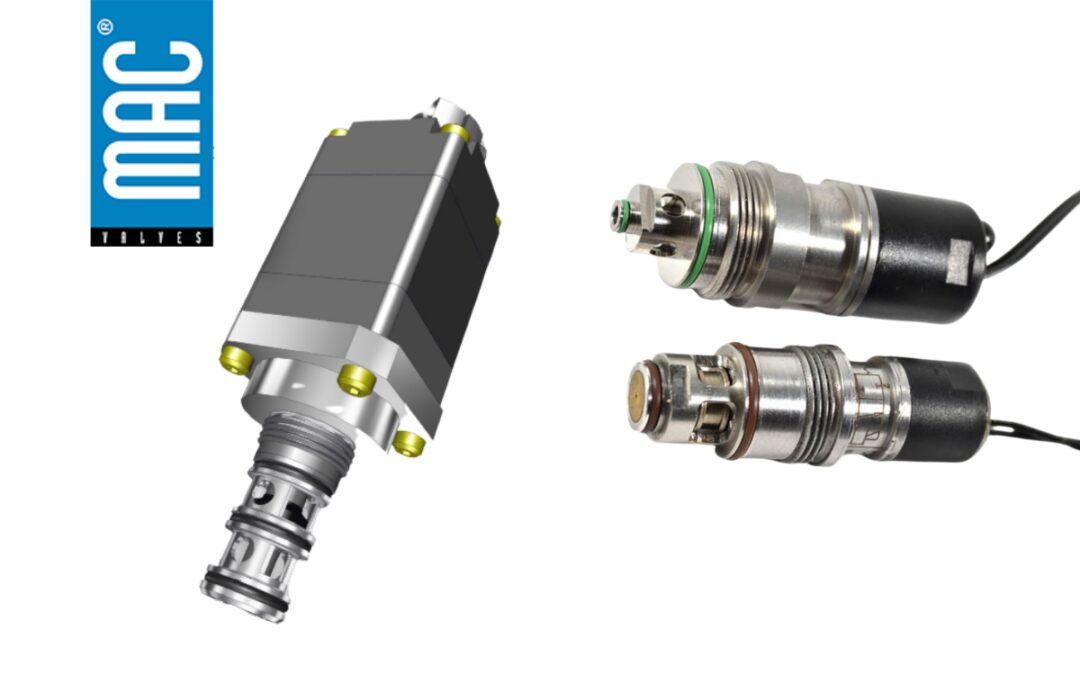
MAC Liquid Valves by BONNER
Liquid valve selection for OEM fluid handling systems
1. OEM design and performance drivers
Across OEM sectors such as medical devices, life sciences, diagnostics, food and beverage, and industrial process equipment, liquid handling performance is a defining characteristic of machine quality. In many cases, the liquid circuit is directly tied to product quality, regulatory compliance, or patient safety.
The common design and performance drivers for liquid valve selection include:
-
-
- Accurate and repeatable flow control over long service life
- Stable performance across pressure, viscosity, and temperature variation
- Predictable behaviour under contamination, wear, or chemical exposure
- Minimal leakage and controlled dead volume
- Reduced maintenance intervention and downtime
- Compatibility with cleaning, sterilisation, or aggressive media
- Consistent global performance across installed bases
-
Liquid valves are often selected late in the design process, yet they directly determine how reliably fluids are metered, isolated, or directed. Once deployed, their internal behaviour governs system accuracy, cleanliness, and long-term stability.
2. MAC liquid valve core technical differentiators
2.1 Separation of actuation and fluid path
A defining feature of the MAC liquid valve range is the physical separation of the actuation mechanism from the fluid path, achieved through diaphragm-based and isolation architectures where appropriate.
From an engineering standpoint, this provides:
-
-
- No direct contact between actuation components and process fluid
- Reduced risk of particulate generation in the fluid path
- Improved chemical compatibility across a wide range of media
- Stable actuation behaviour independent of fluid properties
-
By decoupling actuation forces from fluid dynamics, valve behaviour is governed primarily by mechanical geometry rather than fluid viscosity or composition.
2.2 Controlled sealing and low internal stress
MAC liquid valves are designed to achieve sealing through controlled diaphragm or seal deformation rather than high contact pressure.
This results in:
-
-
- Low seal stress during operation
- Reduced wear on sealing elements
- Minimal change in sealing performance over time
-
In contrast, valves that rely on aggressive seal compression often exhibit:
-
-
- Accelerated seal wear
- Increased actuation force over life
- Drift in opening and closing characteristics
-
For OEM systems requiring stable performance over many cycles, low-stress sealing directly supports repeatability and service life.
2.3 Predictable flow characteristics
The internal geometry of MAC liquid valves is designed to provide:
-
-
- Smooth, repeatable flow paths
- Reduced turbulence compared to abrupt seat designs
- Consistent response to control inputs
-
This predictability is critical in applications such as:
-
-
- Metering and dosing
- Flow switching in analytical instruments
- Controlled delivery in medical or laboratory equipment
-
Valve behaviour remains stable across changes in pressure and flow demand, simplifying system calibration and control logic.
2.4 Minimal dead volume and fluid retention
In many liquid handling applications, dead volume directly affects:
-
-
- Accuracy of dosing
- Cross-contamination risk
- Cleaning and flush efficiency
-
MAC liquid valve designs minimise internal cavities and trapped volumes where fluid can stagnate. From a system perspective, this supports:
-
-
- Faster changeover between fluids
- Reduced flush volumes
- Improved cleanliness in regulated environments
-
This characteristic becomes increasingly important in GMP, medical, and diagnostic applications.
3. Reliability, uptime, and lifecycle behaviour
3.1 Service life under high cycle operation
MAC liquid valves are applied in systems characterised by:
-
-
- Repeated on/off cycling
- Continuous modulation or pulsed flow
- Long operational lifetimes with limited maintenance access
-
Low internal friction and controlled seal stress reduce the dominant wear mechanisms seen in many liquid valve designs.
For OEMs, this translates into:
-
-
- Extended valve service life
- Fewer performance-related field failures
- Reduced replacement frequency
-
3.2 Predictable degradation modes
As with pneumatic systems, the key concern is not whether wear occurs, but how performance changes over time.
MAC liquid valves tend to exhibit:
-
-
- Gradual changes in sealing performance
- Stable actuation behaviour until end of life
- Minimal sudden leakage or loss of control
-
This predictable degradation allows maintenance strategies to be planned rather than reactive, particularly in systems where fluid leakage has high consequences.
4. Robustness to real-world operating conditions
4.1 Fluid variability and contamination tolerance
OEM machines are often deployed across sites with differing operating practices. Fluids may vary in:
-
-
- Cleanliness
- Temperature
- Viscosity
- Chemical composition
-
The isolation and sealing approaches used in MAC liquid valves reduce sensitivity to these variations by preventing direct interaction between moving actuation components and the fluid.
This improves robustness in real-world conditions where ideal fluid specifications are not always maintained.
4.2 Cleaning, flushing, and sterilisation compatibility
Many OEM systems require regular cleaning, flushing, or sterilisation cycles.
MAC liquid valves are well suited to such regimes due to:
-
-
- Smooth internal flow paths
- Minimal dead volume
- Materials compatible with cleaning agents
-
This supports consistent cleaning outcomes and reduces the risk of residue buildup that can compromise performance or compliance.
5. OEM engineering efficiency and standardisation
5.1 Consistent valve behaviour across applications
MAC liquid valve families are designed around common internal principles, allowing OEMs to apply them across:
-
-
- Different fluids
- Different pressure ranges
- Different machine configurations
-
This consistency simplifies:
-
-
- Design reuse
- Validation and verification activities
- Documentation and training
-
For OEMs operating in regulated environments, this reduces both engineering effort and compliance risk.
5.2 Simplified commissioning and calibration
Because valve response remains stable across operating conditions:
-
-
- Calibration values remain valid over time
- Control algorithms require less adjustment
- Commissioning effort is reduced
-
This is particularly valuable in systems where flow accuracy or repeatability is critical to product quality.
6. Positioning versus conventional liquid valve alternatives
Many conventional liquid valves are optimised for basic on/off control or cost efficiency.
The MAC liquid valve range is differentiated by its focus on:
-
-
- Separation of actuation and fluid path
- Low-stress sealing mechanisms
- Predictable flow and sealing behaviour over life
-
For OEMs designing precision fluid handling systems, this design intent aligns closely with long-term performance requirements rather than short-term component cost optimisation.