The Top 5 – Latest Evocon Updates: Smarter Shop-Floor Visibility and Performance Management
Manufacturing performance depends on more than collecting production data. The real value comes from being able to understand that data, identify where losses are occurring and give teams the visibility they need to take action.
That is where Evocon continues to evolve.The latest Evocon updates introduce a number of improvements designed to give manufacturers greater visibility across their operations, from understanding who is working on each shift to comparing production performance over time. For manufacturers using OEE and production monitoring to drive continuous improvement, these updates offer some useful new ways to turn shop-floor data into actionable insight.
1. Greater structure and accountability for operators
One of the latest updates expands Evocon’s operator functionality, making it easier to understand who is operating each shift and how teams are structured.
Operator groups
Operators can now be organised into groups based on the structure of the manufacturing operation, whether that is by team, department, factory or another organisational model.
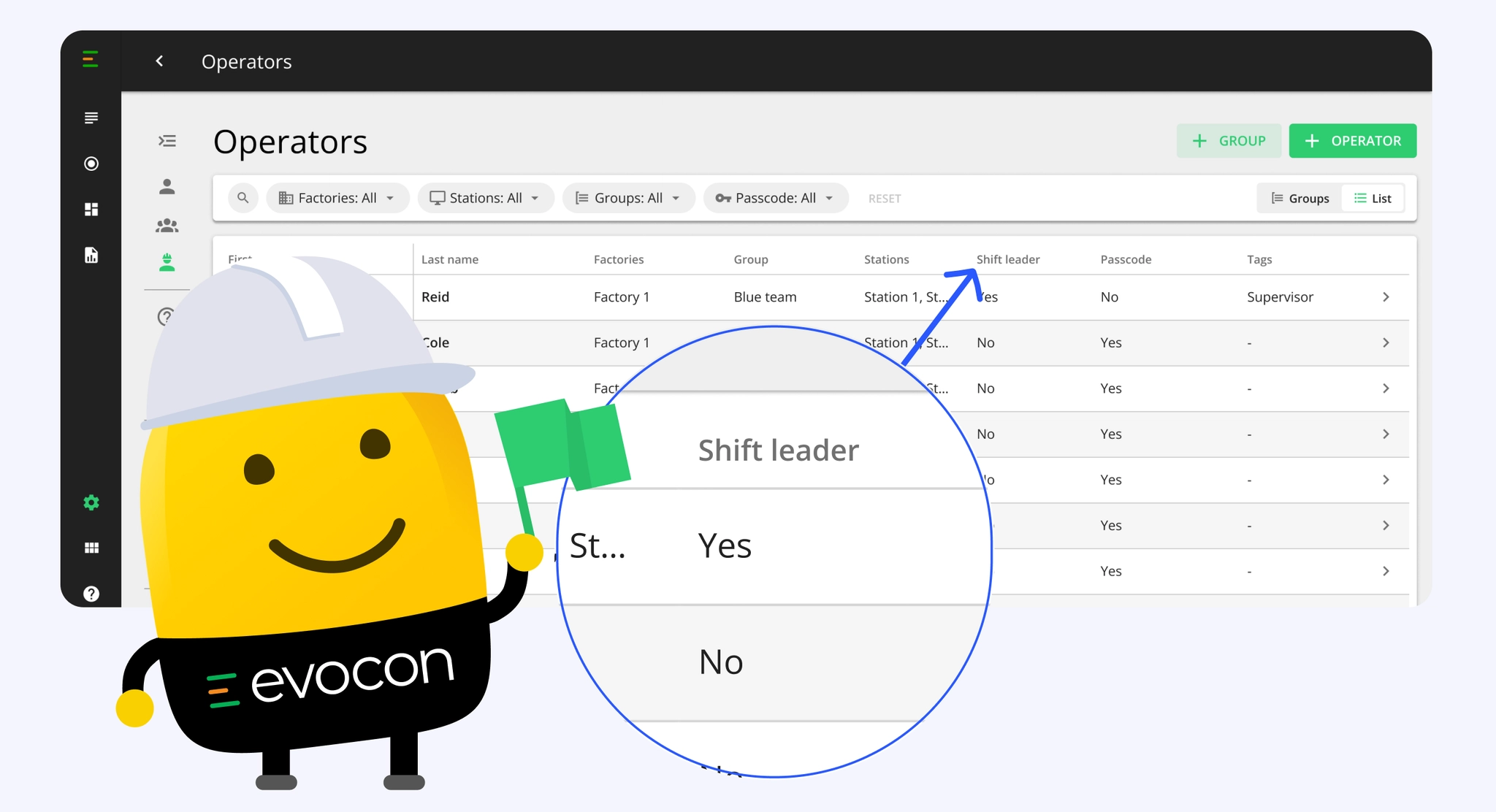
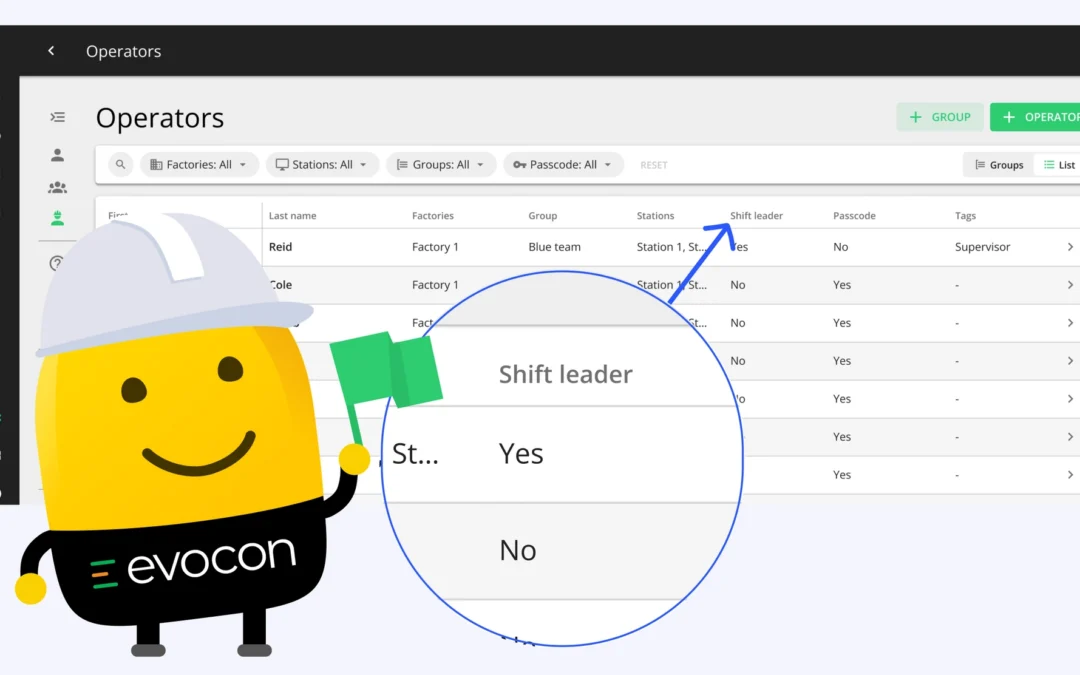
This can make workforce data easier to manage while providing greater context around production performance. Evocon now allows eligible operators to be designated as shift leaders. Shift leaders can then be assigned within Shift View, making it easier to distinguish leadership roles from other operators working on the shop floor.
For manufacturers, this additional level of visibility can help connect production performance with the people responsible for managing each shift. Seasonal and temporary workers can also be added as additional workforce through Shift View.
This is particularly relevant for manufacturers where workforce requirements fluctuate due to seasonal demand, production peaks or temporary staffing requirements. Together, these changes provide a clearer picture of the relationship between people, shifts and production performance.
2. Compare production performance across different periods
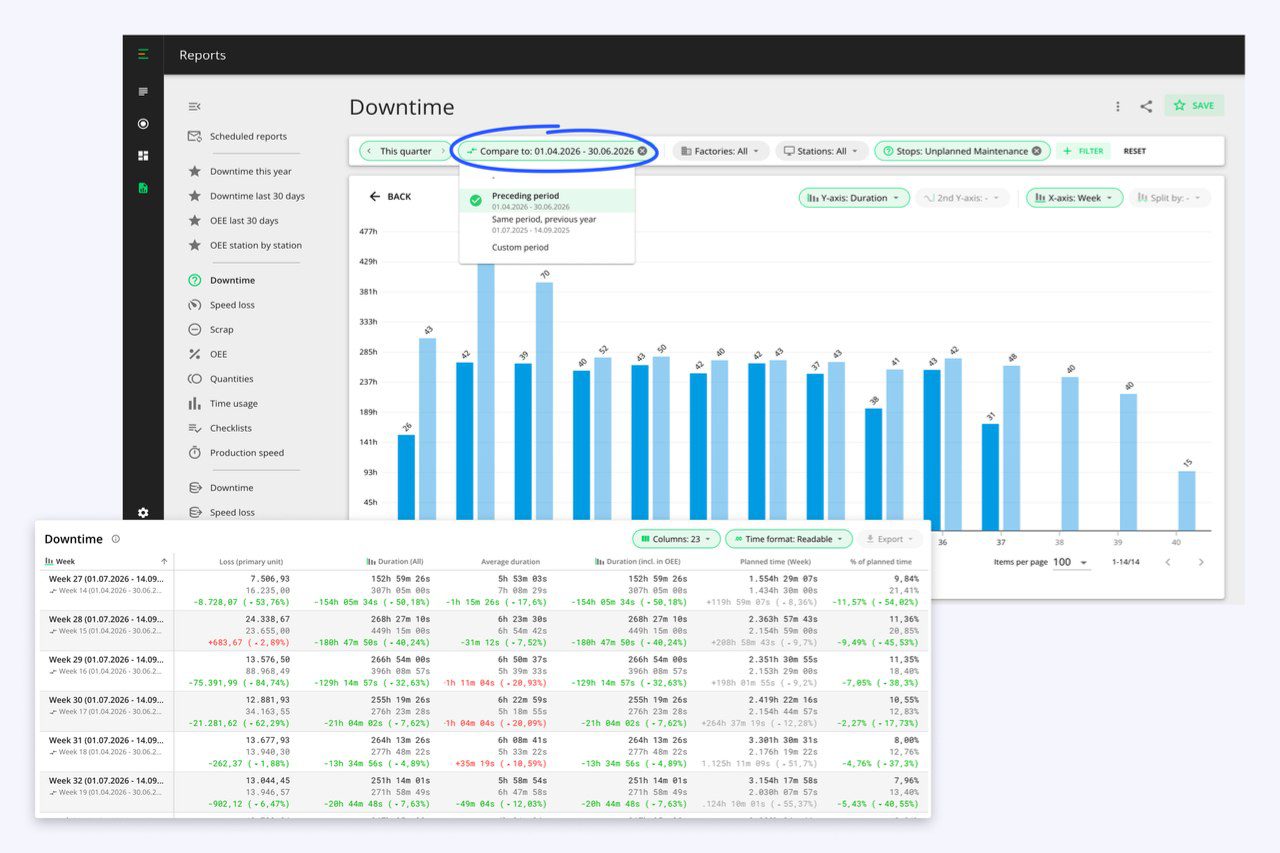
One of the most useful updates is the introduction of period comparisons within reports. Looking at production data in isolation only tells part of the story. For example:
- Is downtime actually improving?
- Is scrap increasing compared with the same period last year?
- Was a poor production week an isolated event?
- Are improvements being sustained over time?
- Is a change in performance part of a wider seasonal pattern?
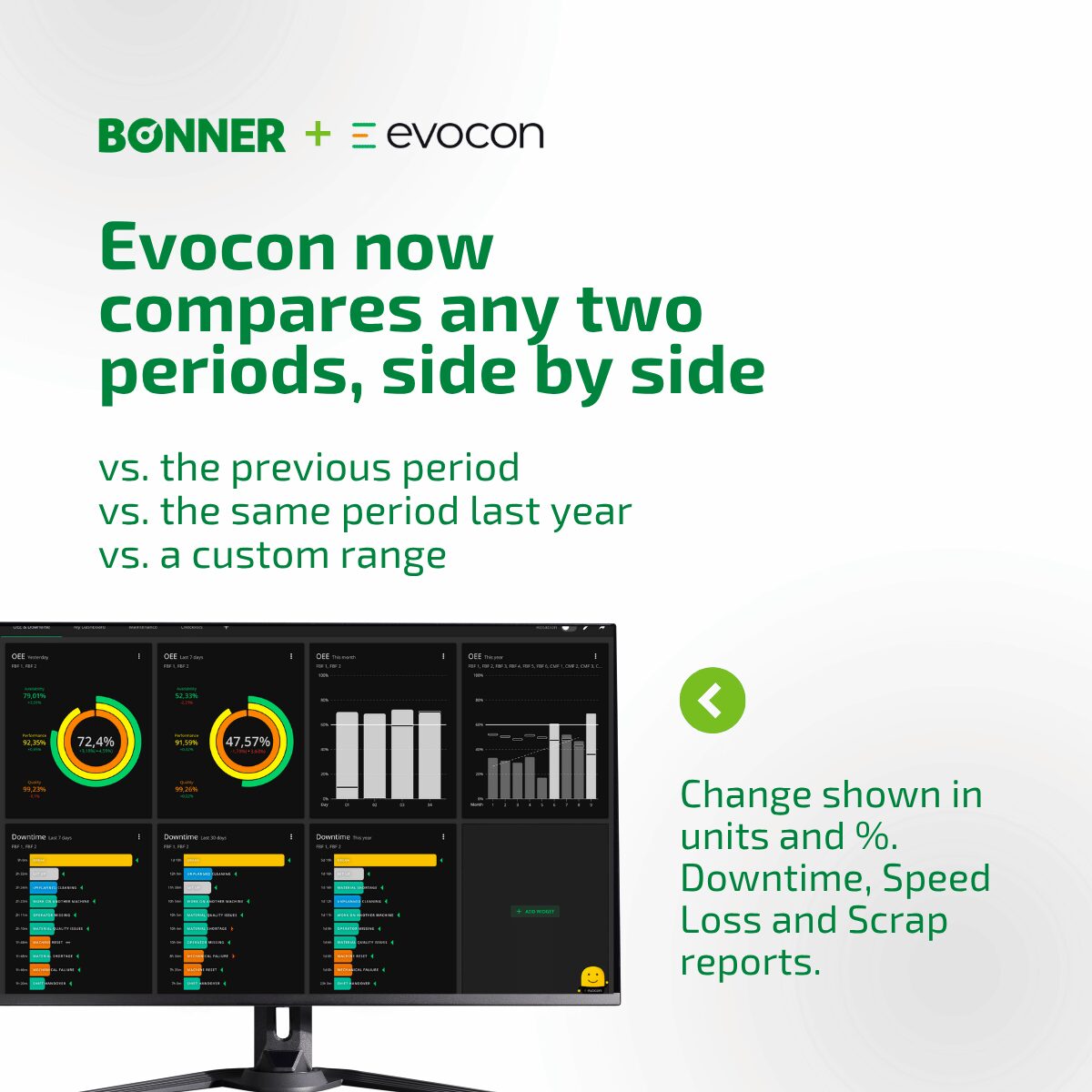
The new comparison functionality makes it easier to answer these questions. Users can compare a reporting period with:
- The preceding period
- The same period from the previous year
- A custom date range
The reports then display the two periods together, with the change shown in both units and percentage terms. Currently, comparisons are available within the Downtime, Speed Loss and Scrap reports for Evocon Pro and Enterprise users. This type of functionality can be particularly valuable when using production data as part of a continuous improvement programme.
Rather than simply asking “What happened?”, manufacturers can see what has changed and are improvement activities actually making a difference.
3. More context around speed losses
Another improvement is the introduction of a new “% of planned time” column within the Speed Loss report. This shows each speed-loss reason as a percentage of planned production time. Instead of simply seeing how much time has been lost, production teams can identify the proportion of planned production time associated with particular losses and compare this with other performance measures.
For manufacturers working to identify the biggest contributors to lost production time, this additional context can support more focused improvement activity.
4. Easier access management across factories
Evocon has also improved the way Office and Shift View users are set up. Station groups can now be selected from the station dropdown and access can be assigned across a factory in bulk. For larger manufacturing environments, this can simplify the administration of user permissions and reduce the need to configure access one station at a time.
It is a small usability improvement, but these types of changes can make a difference when production monitoring systems are being used across multiple stations, lines or facilities.
5. Better visibility of device ownership
A new Ownership column has also been added to the Devices table. This shows whether a device is:
- Purchased
- Rented
- On trial
- Returned
Having this information visible within the system provides a clearer picture of the commercial status of connected devices. For businesses managing multiple production monitoring devices, this can make equipment administration easier and provide greater visibility across the estate. The common theme across these latest developments is greater operational visibility. Manufacturing data is most useful when it helps answer practical questions on the shop floor.
Evocon’s continued development is focused on making this information more accessible and actionable for manufacturing teams. For businesses already using OEE monitoring, these updates provide additional tools for understanding performance. For manufacturers still relying heavily on spreadsheets, manual reporting or disconnected production data, they also demonstrate what is possible when production information is captured and presented in a more structured way.
Turning production data into action
At BONNER, we work with manufacturers to improve operational performance through automation, instrumentation and trusted data. Technology is only part of the solution. The real objective is to give manufacturing teams better information so they can identify problems earlier, understand where performance is being lost and make informed decisions about improvement.
Evocon is one of the tools that can support this approach by providing greater visibility into production performance and OEE Software. If you’re exploring how better production data could help your operation, we’d be happy to discuss what this could look like in your manufacturing environment.
Want to see what Evocon could do for your production operation?
Book a demo with BONNER today and discover how production monitoring and OEE data can help you gain greater visibility of performance, identify losses and support continuous improvement.