

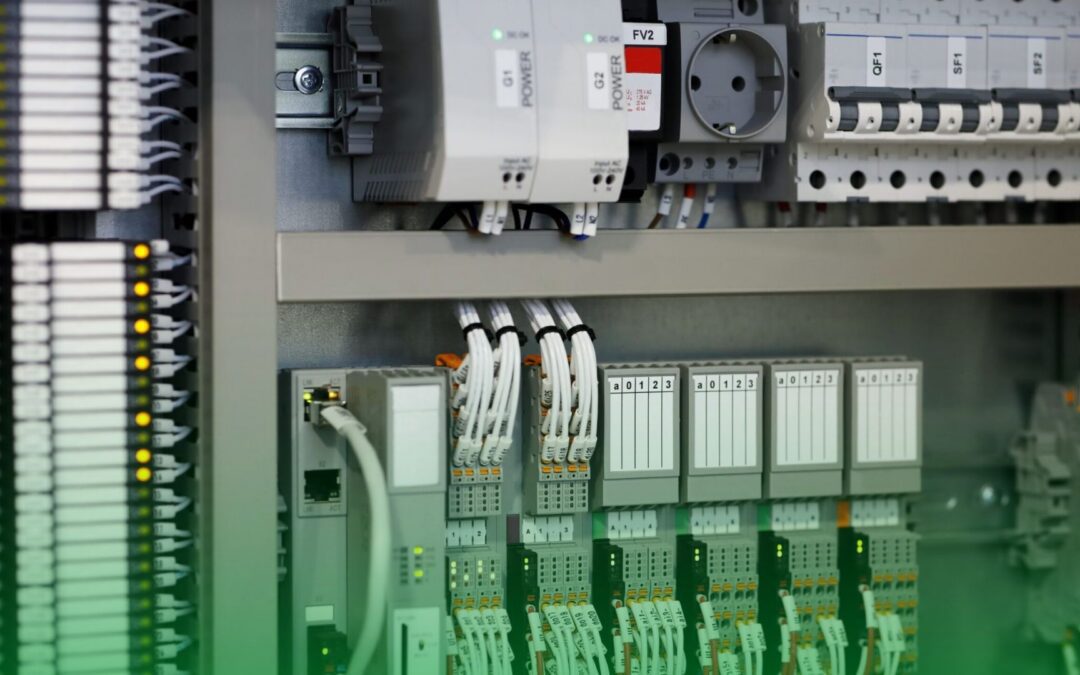
During a routine inspection, a client’s industrial process scrubber system failed to meet required operational checks and was immediately taken out of service. As a critical component in controlling process emissions, the failure posed both a regulatory compliance risk and a potential disruption to production. With environmental standards at stake and downtime looming, the client required a fast, precise, and effective solution.
BONNER’s automation team was mobilised on an emergency call-out basis, bringing specialist expertise in industrial control systems and fault diagnostics.
Rather than replacing components broadly or overhauling the system unnecessarily, the team applied a structured fault-finding methodology:
- Systematic inspection of the control panel and I/O
- Verification of system responses under live operating conditions
- Step-by-step tracing of the control sequence
This targeted approach ensured a fast and accurate diagnosis, minimising both downtime and cost. The issue was traced to a failed control relay within the scrubber control circuit.
This seemingly small component failure had a critical impact:
This seemingly small component failure had a critical impact:
- It prevented the correct control sequence from executing
- It directly caused the system to fail inspection criteria
- It highlighted how minor control faults can compromise entire systems
Solution DeliveredBONNER’s automation engineers implemented a focused repair strategy:
- Replacement of the faulty control relay
- Inspection and verification of associated wiring and terminations
- Elimination of any potential secondary faults
The system was then subjected to comprehensive functional testing, including:
- Normal operating conditions
- Simulated fault scenarios
This ensured the scrubber system was fully restored and robust. Following repair and testing:
- The scrubber system was successfully returned to service
- The unit passed all re-testing and inspection requirements
- Production disruption was kept to an absolute minimum
- Environmental compliance was fully restored without major system changes
Key Takeaways
- Rapid Response: Immediate mobilisation to address a critical plant issue
- Precision Fault Finding: Avoiding unnecessary replacements through targeted diagnostics
- Critical Component Awareness: Small control elements can have major system-wide impacts
- Compliance Support: Ensuring clients meet environmental and regulatory standards efficiently