

Modern manufacturing facilities generate more data than ever before, however better technology doesn’t always mean better decisions.
Across manufacturing sites, we still see instrumentation issues that quietly reduce efficiency, increase waste and make troubleshooting far more difficult than it needs to be. Most don’t trigger alarms or stop production, they simply become accepted as “the way the plant operates.”
Here are three of the most common mistakes we continue to encounter:
1. Trusting the Reading Without Verifying the Measurement
One of the biggest misconceptions in manufacturing is that if a value appears on the HMI, it must be correct.
In reality, every measurement depends on an entire chain of components working together. A temperature sensor may be accurate, but transmitter drift, incorrect PLC scaling or signal issues can still result in inaccurate data reaching the operator.
We’ve seen production teams spend days investigating product quality issues, only to discover the root cause was a small measurement error that had gone unnoticed for months.
The lesson is simple: don’t just calibrate sensors. Verify the complete measurement loop.
2. Collecting Data That Nobody Uses
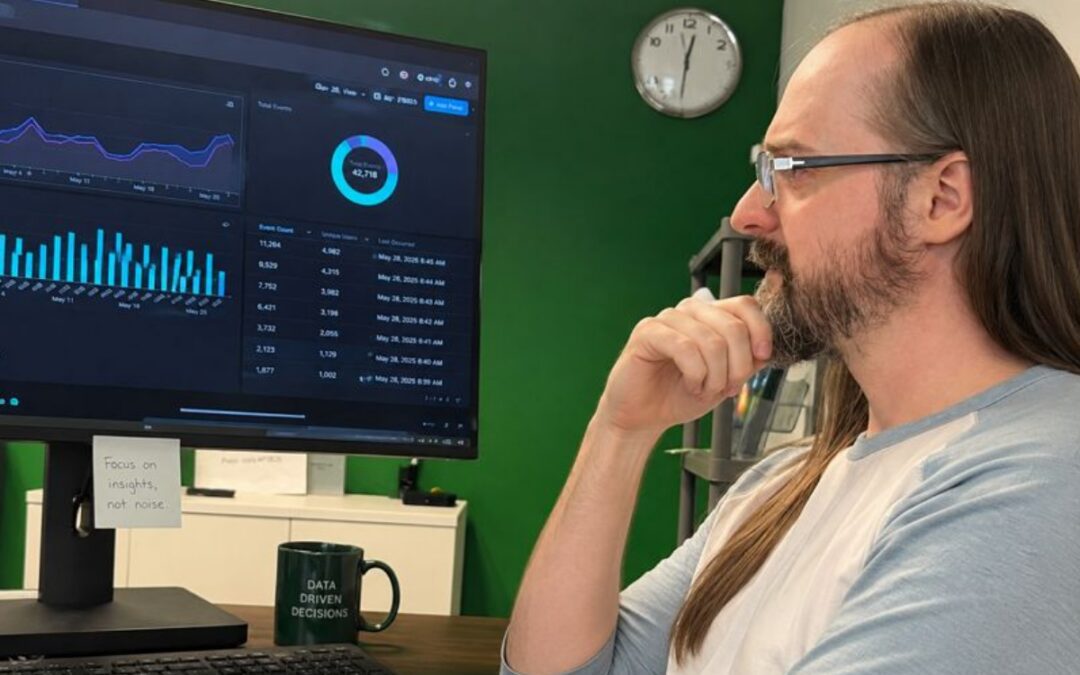
Many facilities have invested heavily in SCADA systems, historians and connected devices, yet operators still rely on Excel spreadsheets to understand production performance.
Data is valuable only when it’s presented in a way that supports decision-making.
Instead of generating dozens of reports, manufacturers should focus on dashboards that answer practical operational questions:
- Which assets are causing the most downtime?
- Where is energy consumption increasing?
- Which measurements are drifting?
- Which alarms require immediate action?
The objective isn’t to collect more data, it’s to make better decisions with the data you already have.
3. Treating Instrumentation as a Maintenance Task Rather Than a Process Improvement Tool
Instrumentation is often viewed purely as a compliance requirement.
Calibrate the equipment, issue the certificate and move on.
In reality, instrumentation provides some of the earliest indicators of developing process problems.
A pressure transmitter that begins drifting, a flow meter gradually losing accuracy or a refrigeration system running longer to maintain temperature can all highlight issues long before production is affected.
When instrumentation data is used proactively, it becomes a powerful tool for improving reliability, reducing waste and planning maintenance based on equipment condition rather than fixed intervals.
None of these mistakes are caused by poor equipment, they happen because manufacturers understandably trust the information they’re given.
The challenge is that decisions are only as good as the measurements behind them and that’s why we believe the goal of instrumentation isn’t simply to measure a process, it’s to give manufacturers confidence that every operational decision is based on accurate, reliable data.
We work with manufacturers to improve measurement confidence through calibration, instrumentation, automation and SCADA systems.
Whether it’s identifying hidden measurement errors, modernising legacy instrumentation or improving operational visibility, our focus is always the same:
Helping manufacturers make better decisions through measurements they can trust.